






Recently viewed products
Medieval & Knight Helmets
A helmet is the piece of kit that does the most work for the least square footage. Everything else on a character has to be looked at to register. The helmet reads from across a field.
We make steel medieval helmets and knight helmets for larp, festival, and costume use. All hand-shaped from mild steel, all lined with padded leather for a fit that sits between comfortable and forgettable, all built lighter than their historical counterparts so you can actually wear one through a full event. The range covers most of the medieval period and a few centuries either side, from Viking spangenhelms to late-Renaissance morions, plus a handful of fantasy pieces built to the same standard.
Browse by style
Closed knight helmets The full-face medieval silhouette. Built for presence, made famous by every Crusader painting and tournament scene you've ever seen.
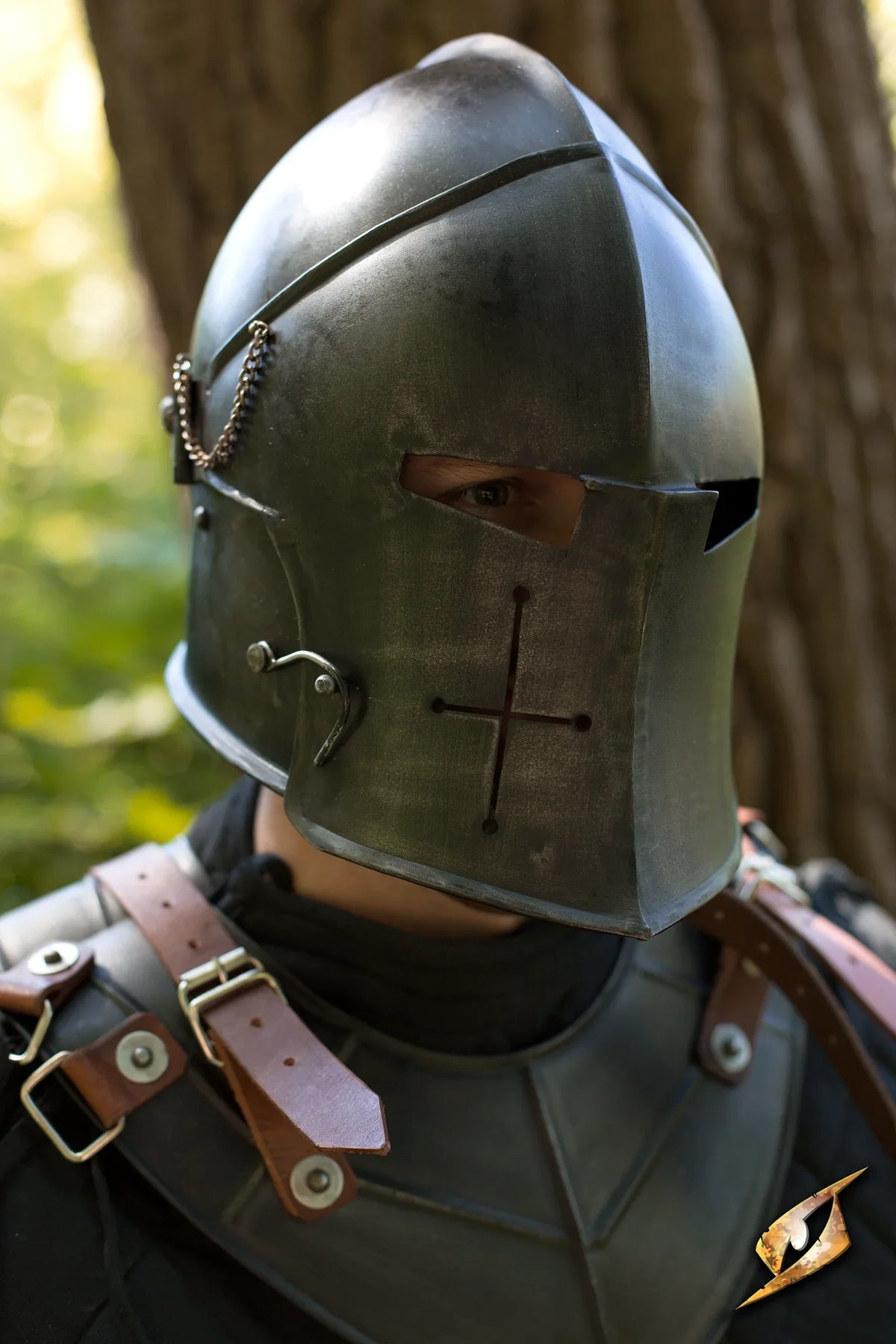
- Sugar Loaf — A great helm variant from the late 13th century. Conical crown, fully enclosed face, narrow eye slits. The iconic crusader-era look.
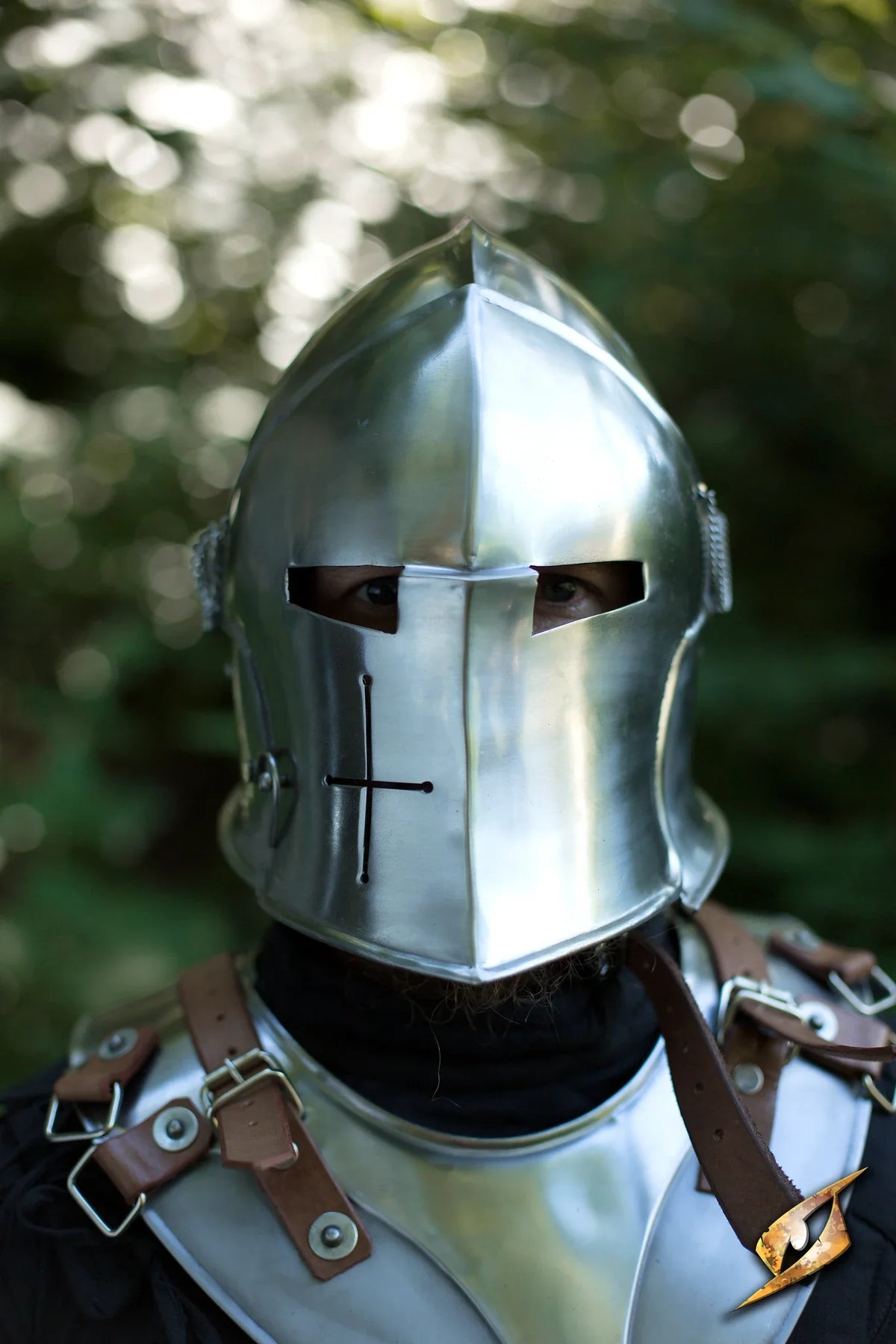
- Visored Barbuta — Italian shell, pivoting visor. Drop the visor for the dramatic closed-face moment, lift it for everything else. Best of both worlds piece.
Open knight helmets Face visible, voice clear, peripheral vision intact. What most experienced players actually wear most of the time.
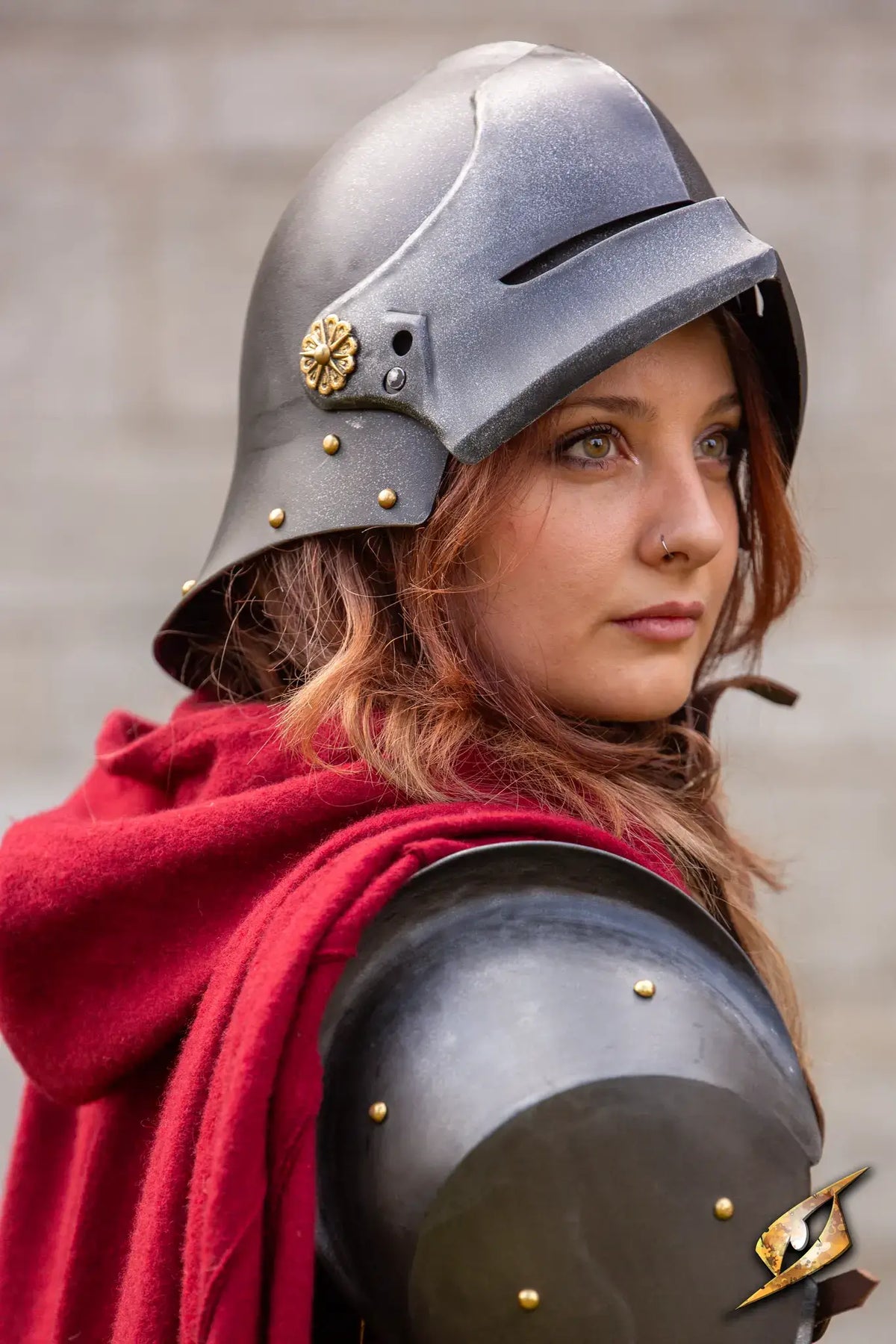
- Sallet — Mid-15th century, swept-back tail at the neck. Probably our most versatile knight helmet. Wears open or with a bevor for the closed look.
- Barbuta — Italian, single piece of hammered steel, T-shaped face opening. Fast to put on, excellent vision, comfortable for long wear.
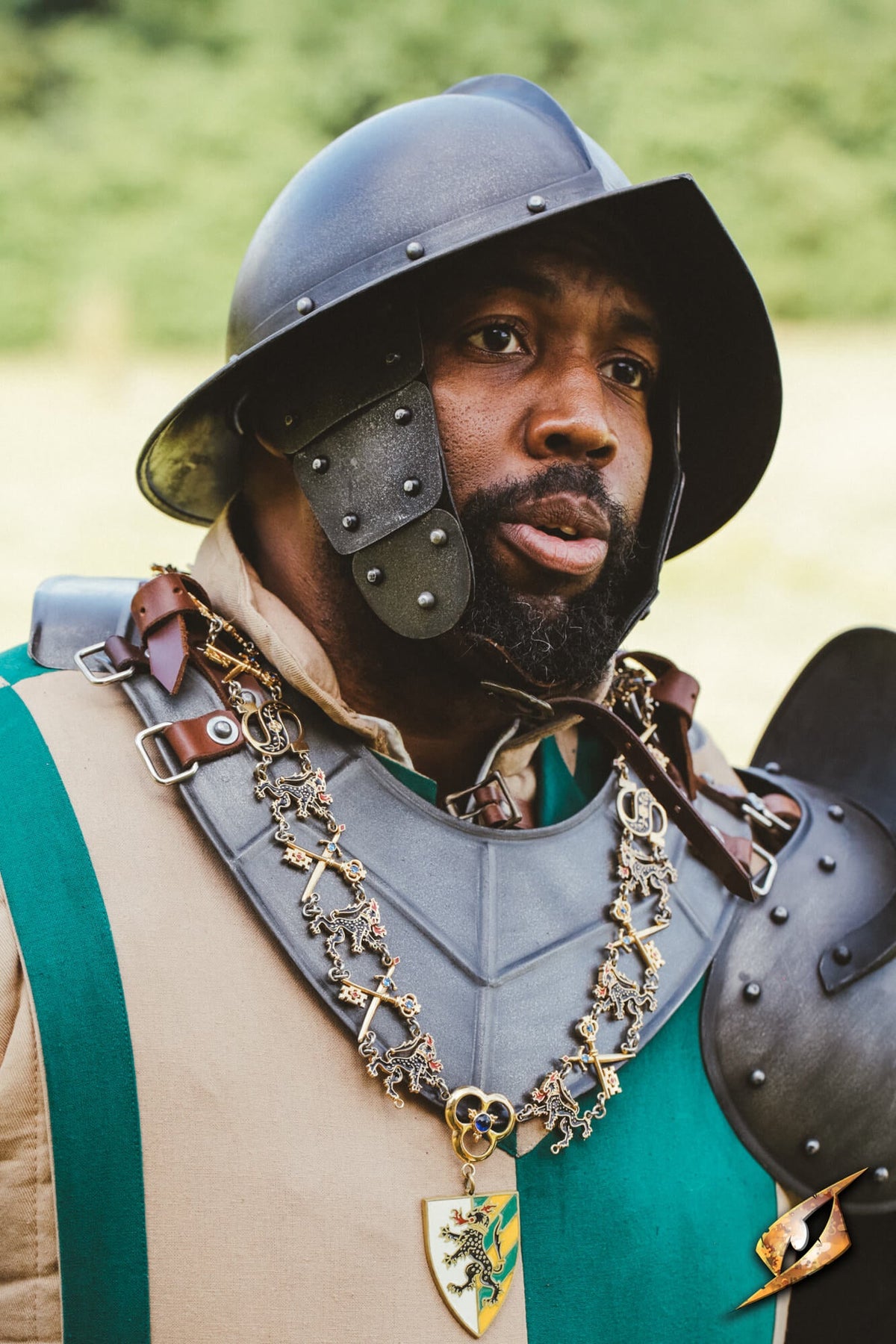
- Burgonet — 16th century, brimmed, with cheek pieces. Reads as a later-period soldier or officer rather than a classic medieval knight.
Viking & early medieval helmets Pre-knight era. Simpler shapes, mostly open-faced, defining silhouettes of the 9th to 12th centuries.
- Viking Spangenhelm — Segmented construction, iron frame, the helmet you see on most Viking-age finds across northern Europe.
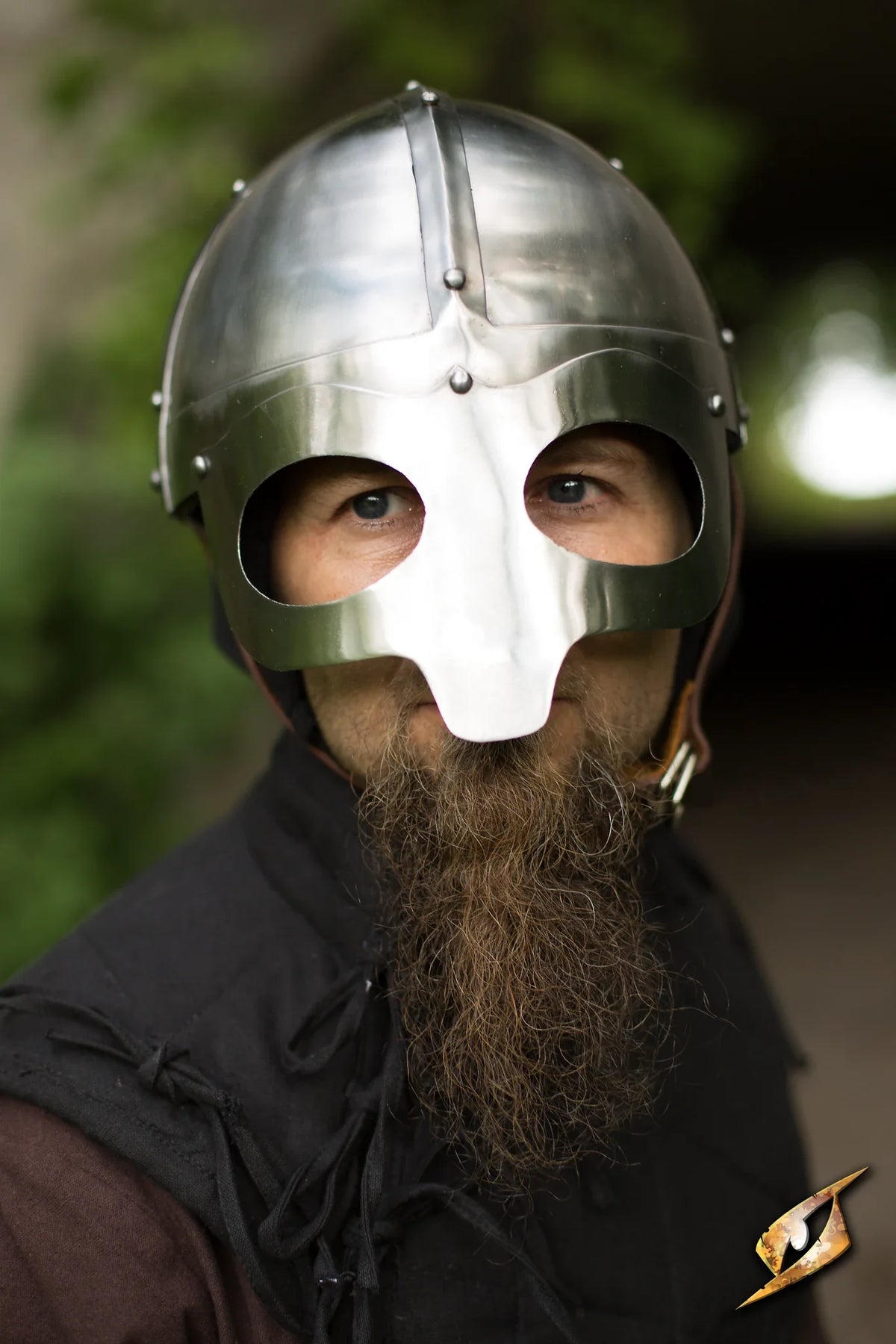
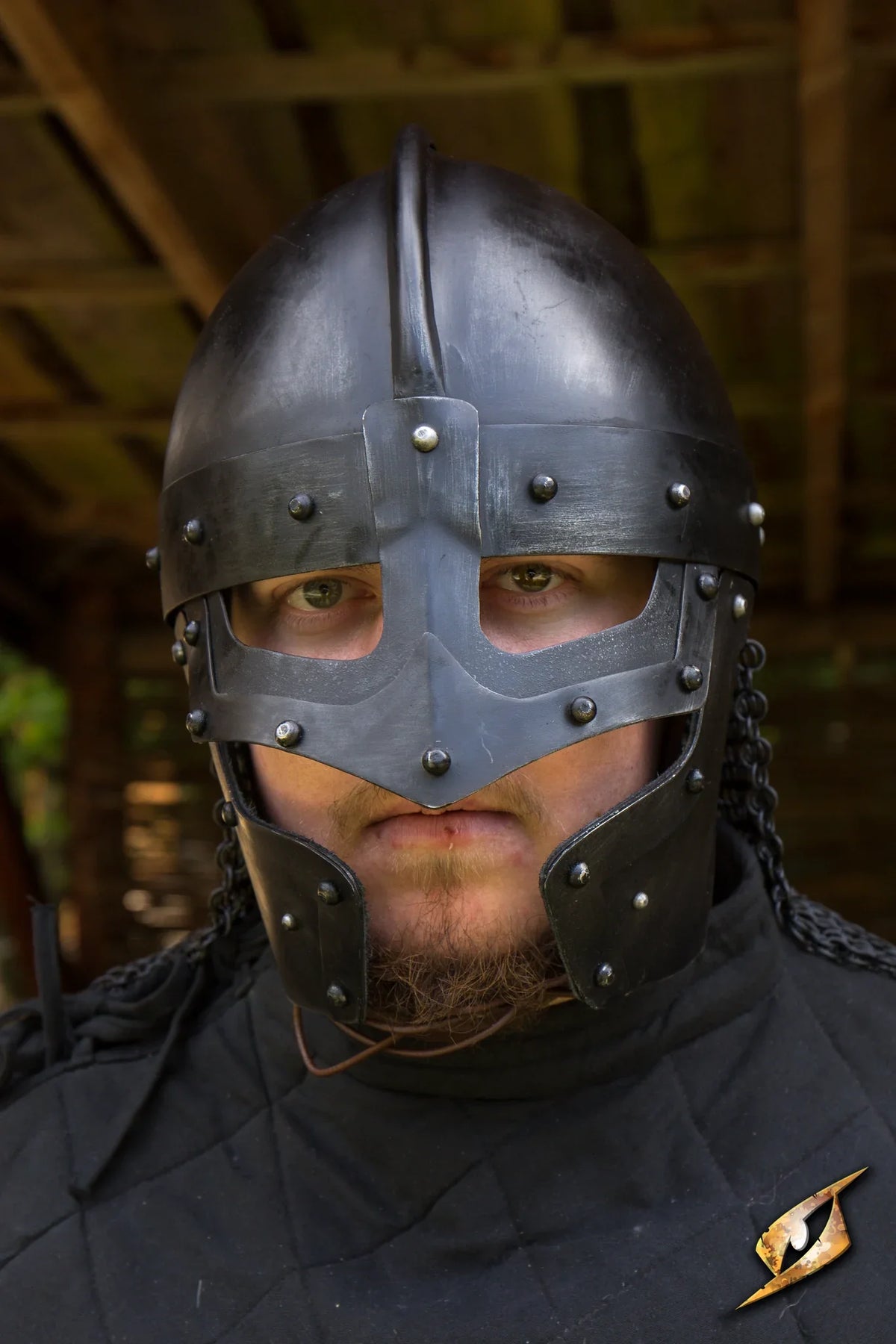
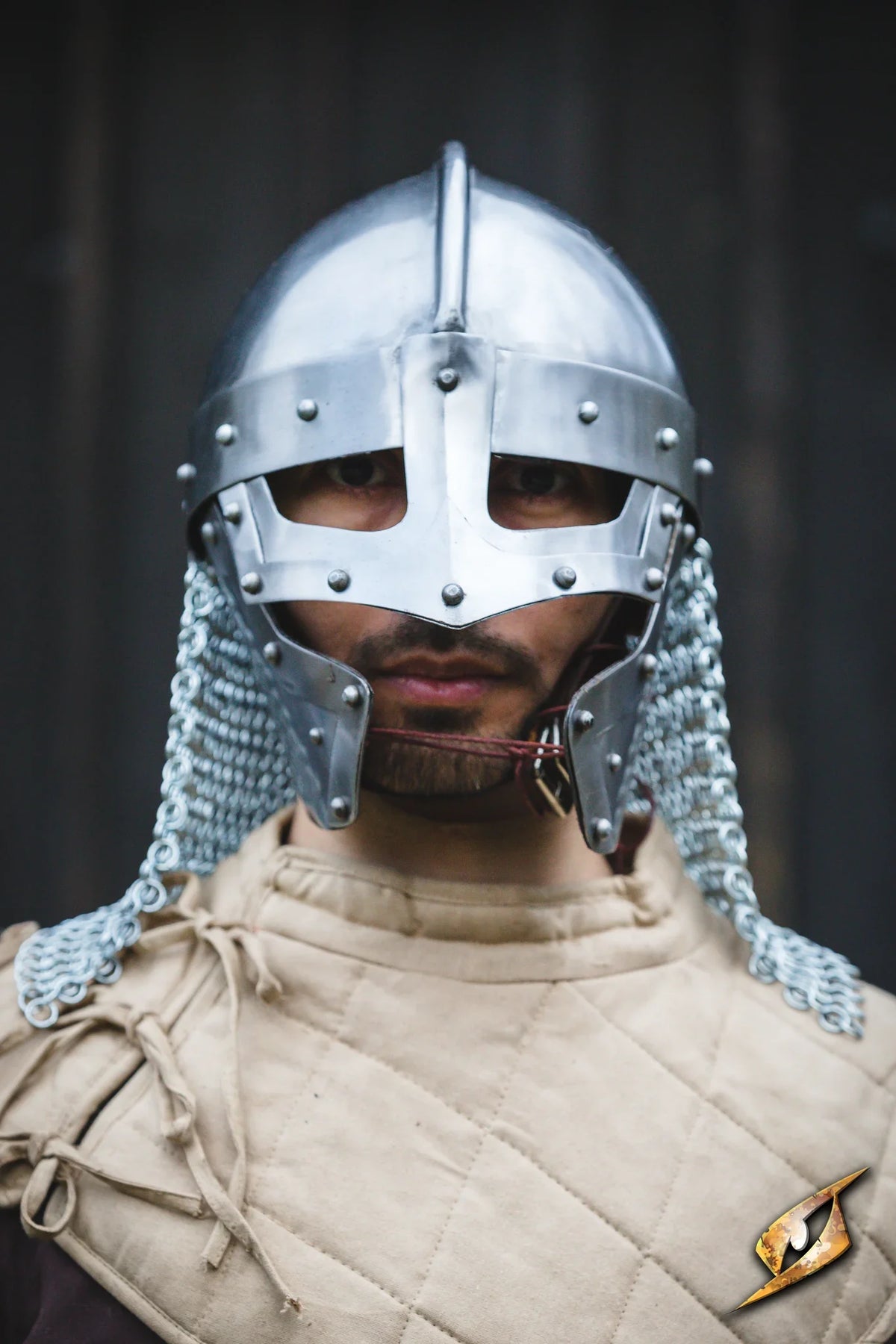
- Viking Mask Helmet — Ocular mask covering eyes and upper face. The Gjermundbu-style piece that has come to define how we picture Viking warriors, even though only a handful of examples have ever been found.
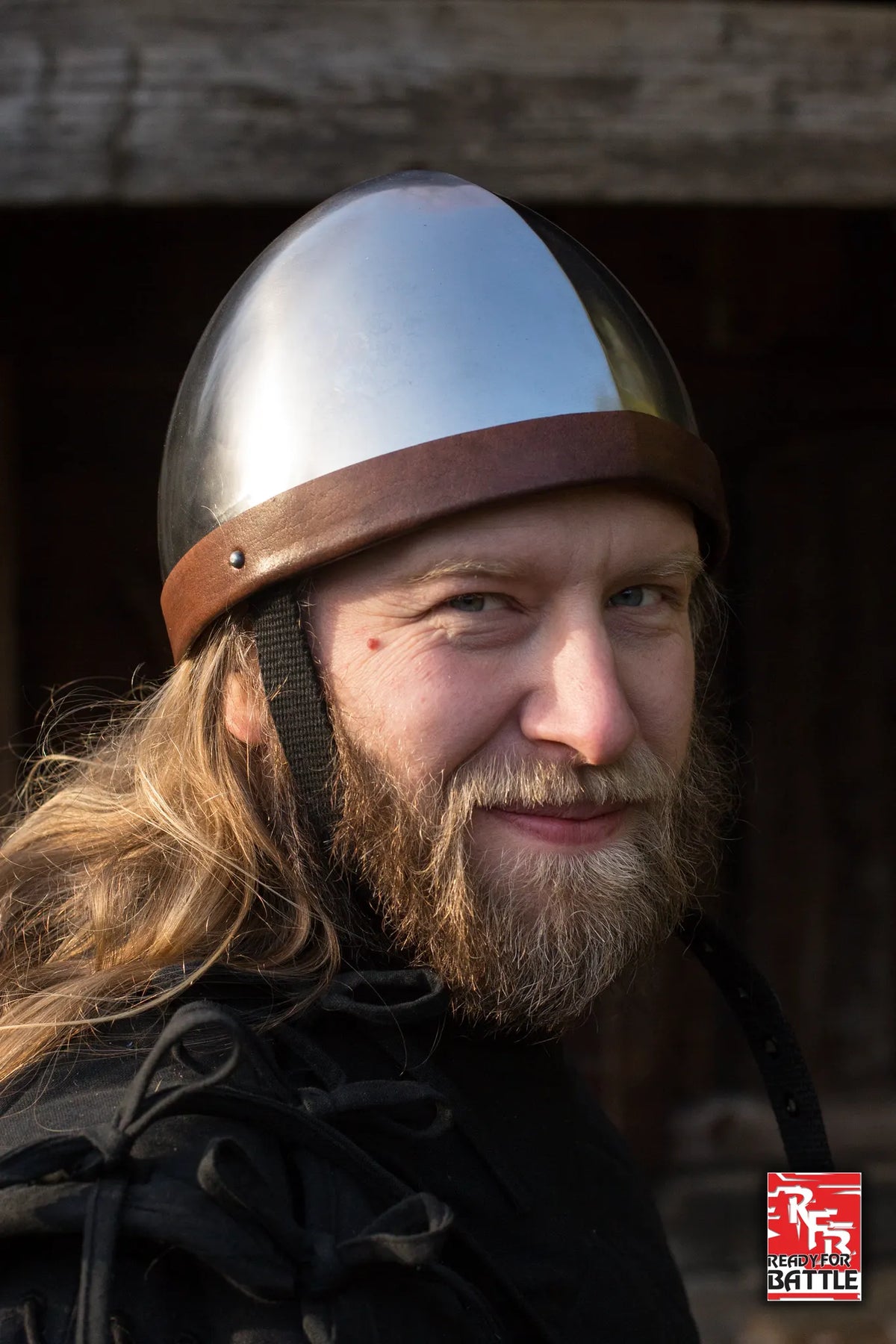
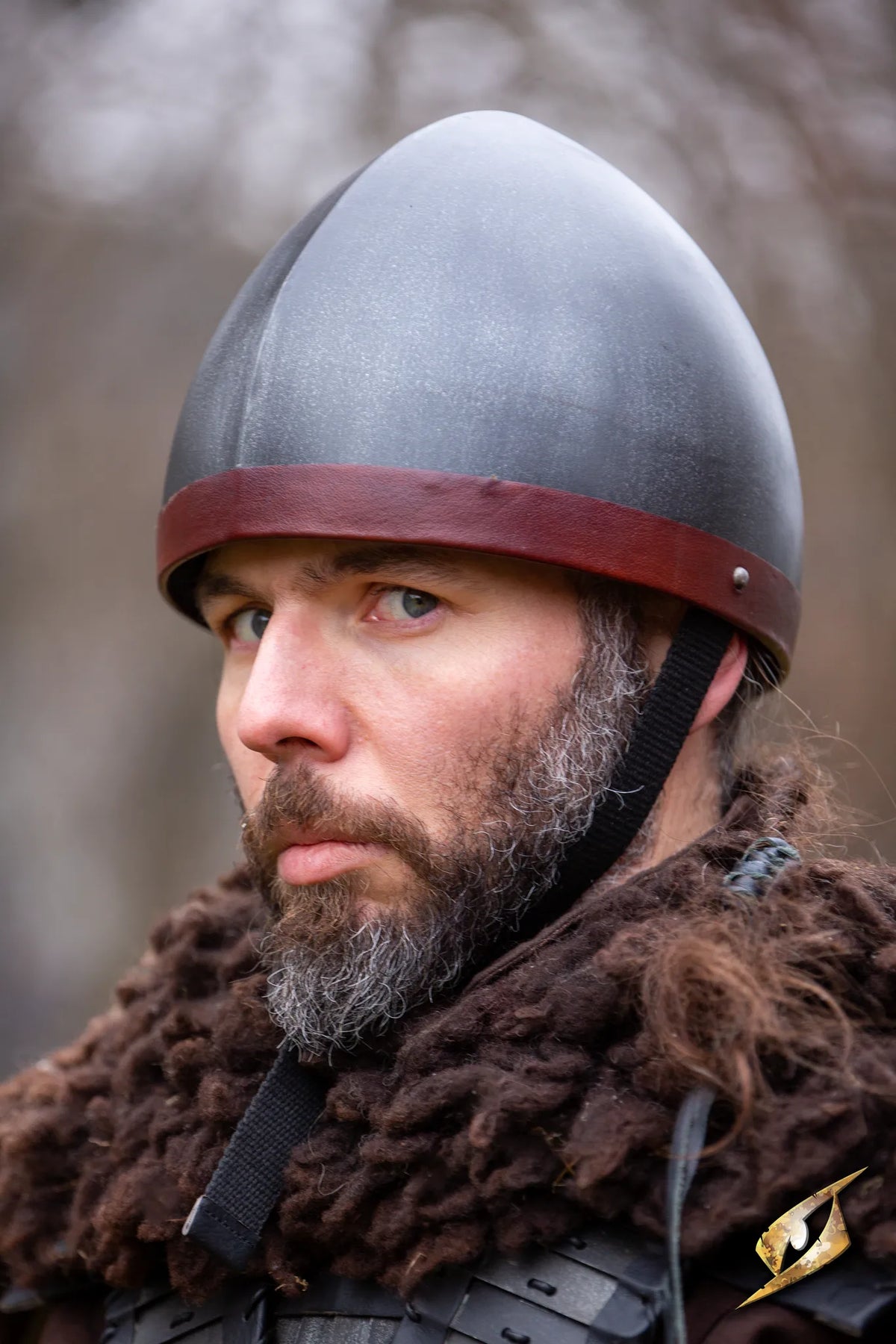
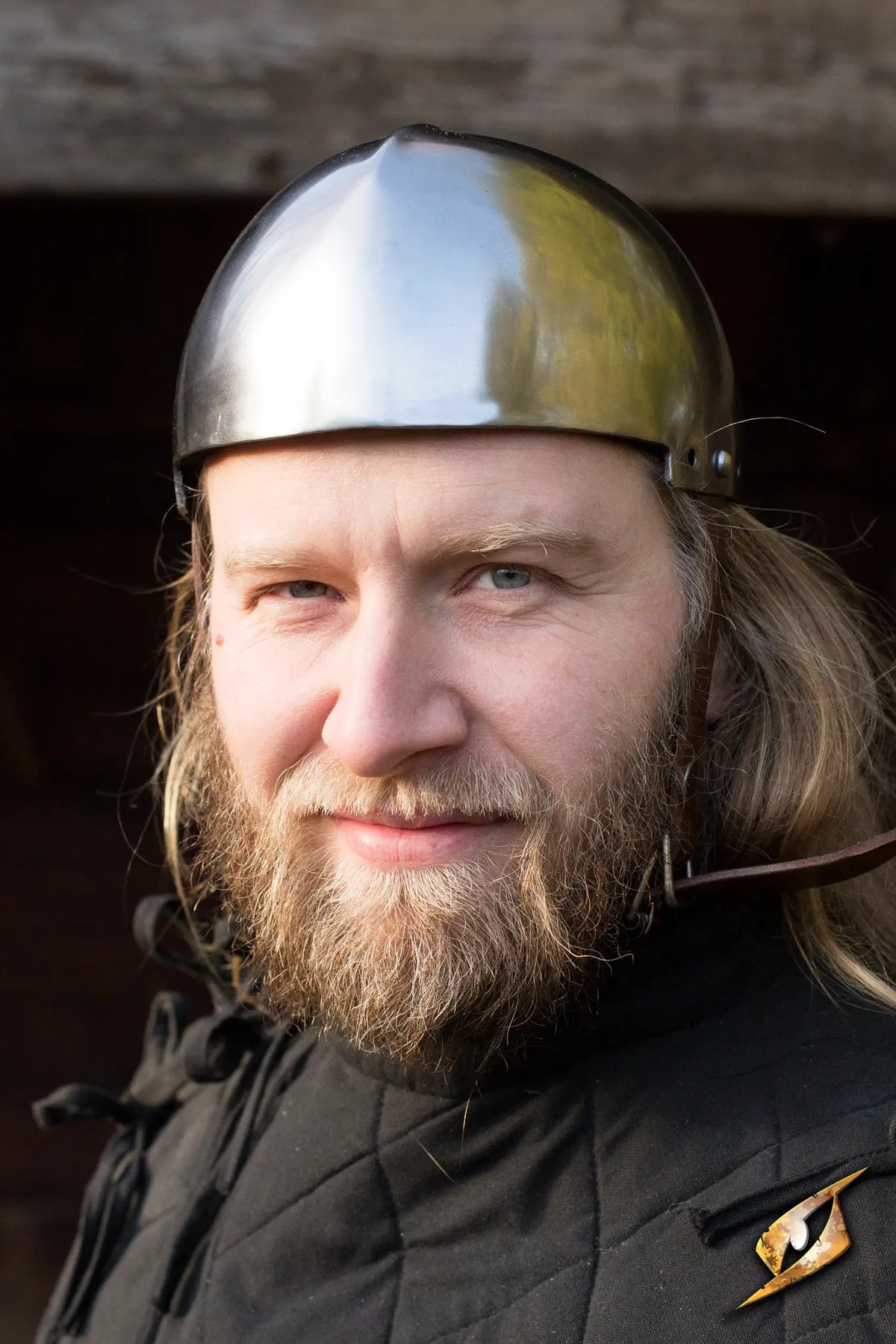
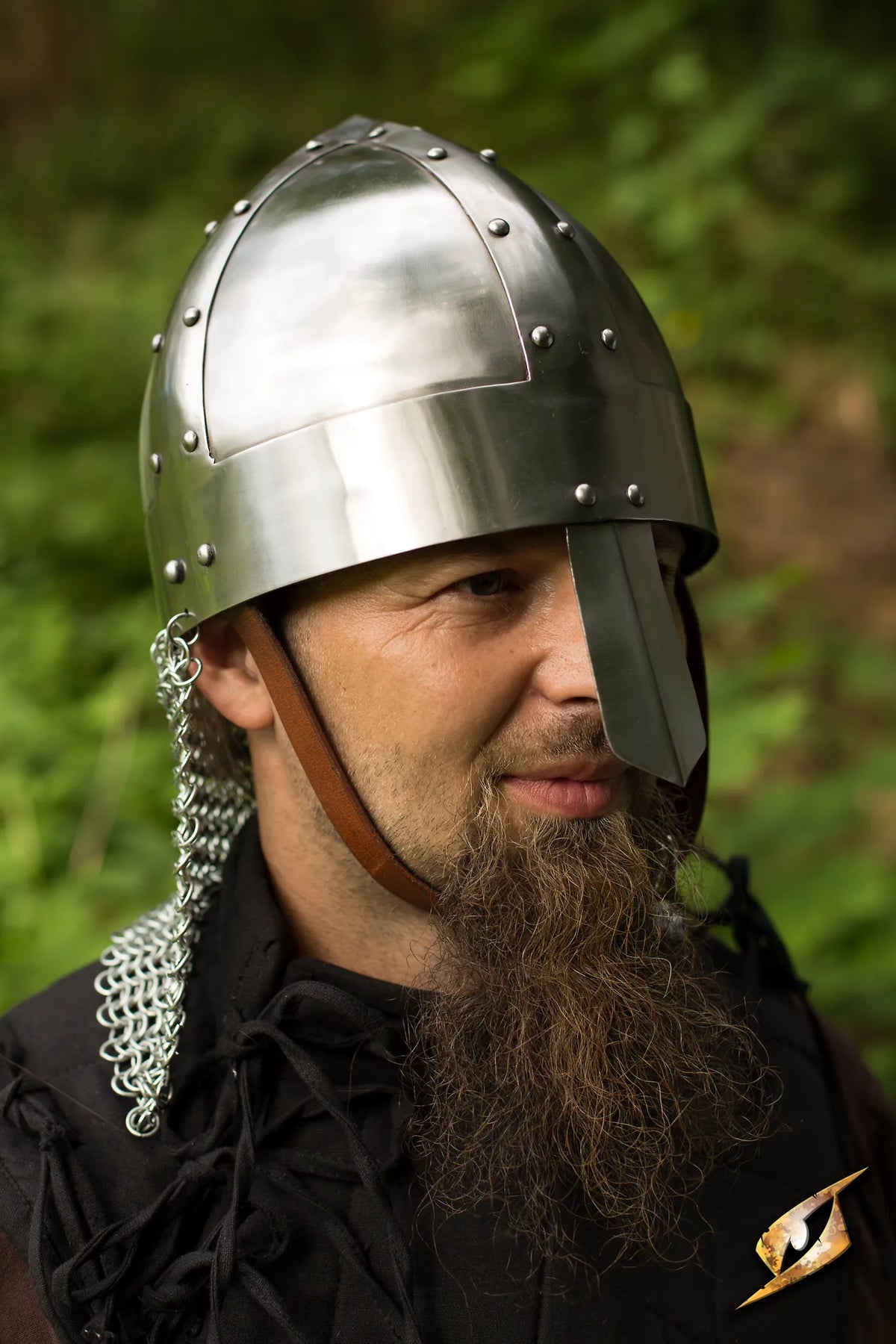
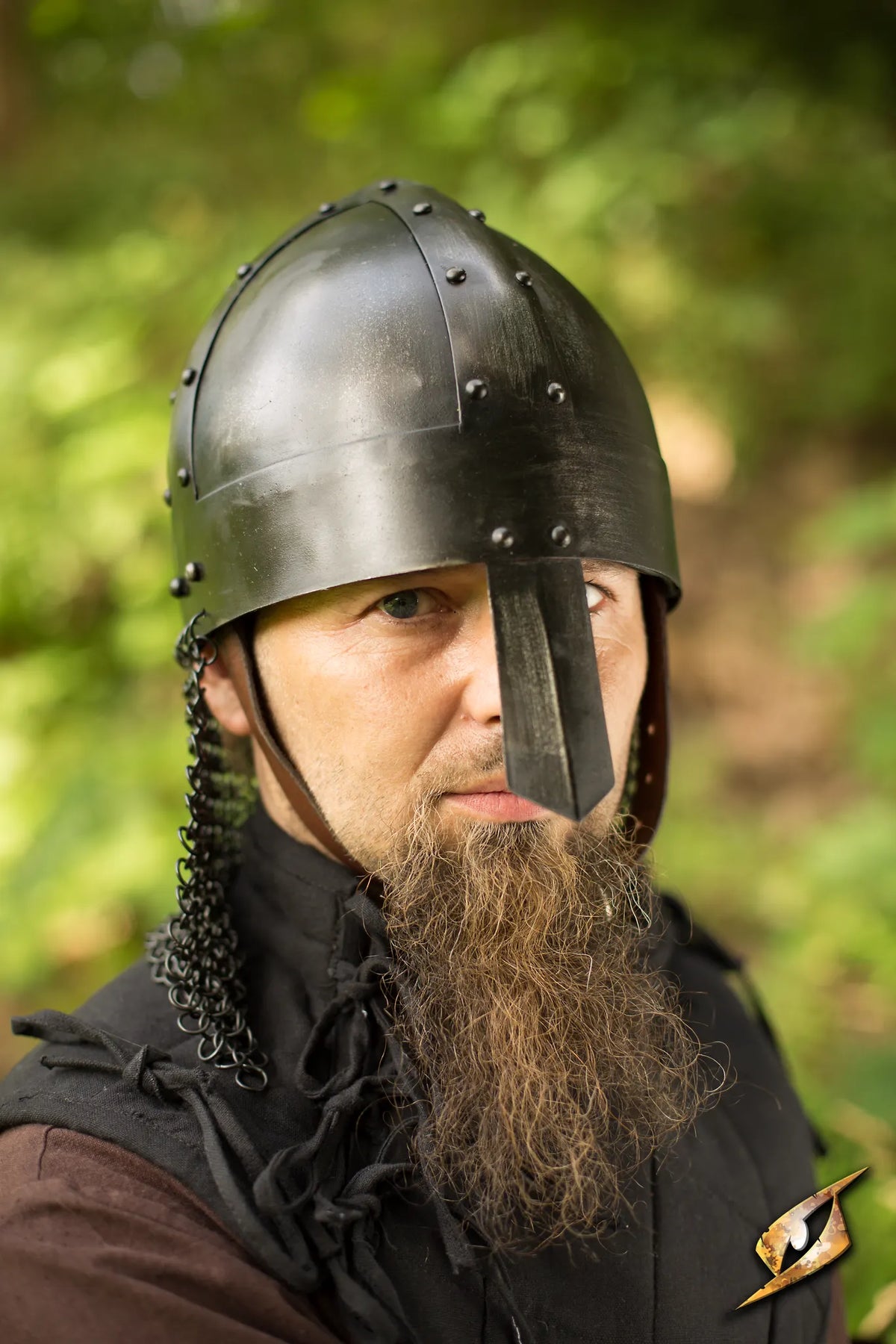
- Norman Nasal Helmet — Conical, simple nose-guard, what the Normans wore at Hastings and what most of 11th and 12th century Europe wore alongside them. Cheap, light, instantly readable.
Infantry & later medieval helmets What the people who weren't knights actually wore. Less glamour, more practicality.
- Kettle Hat — Wide-brimmed, open-faced. Worn by foot soldiers, archers, and anyone who wanted to keep the sun and arrows off their head without losing visibility. The hard hat of the medieval battlefield.
- Morion — Late 16th century, high comb, swept brim. Conquistador-era. Strictly post-medieval but it slots in naturally with the later end of the range.
Beyond Europe
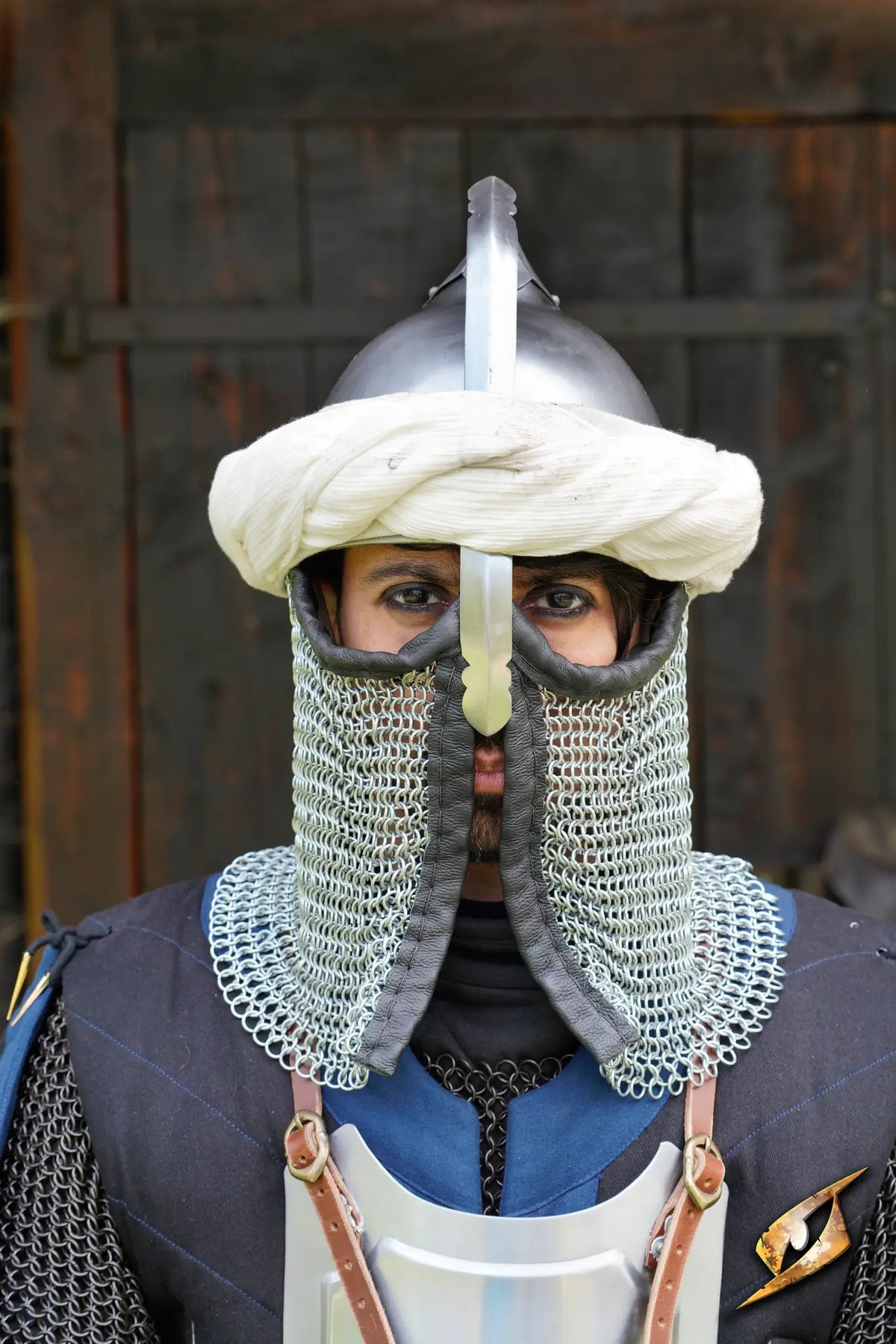
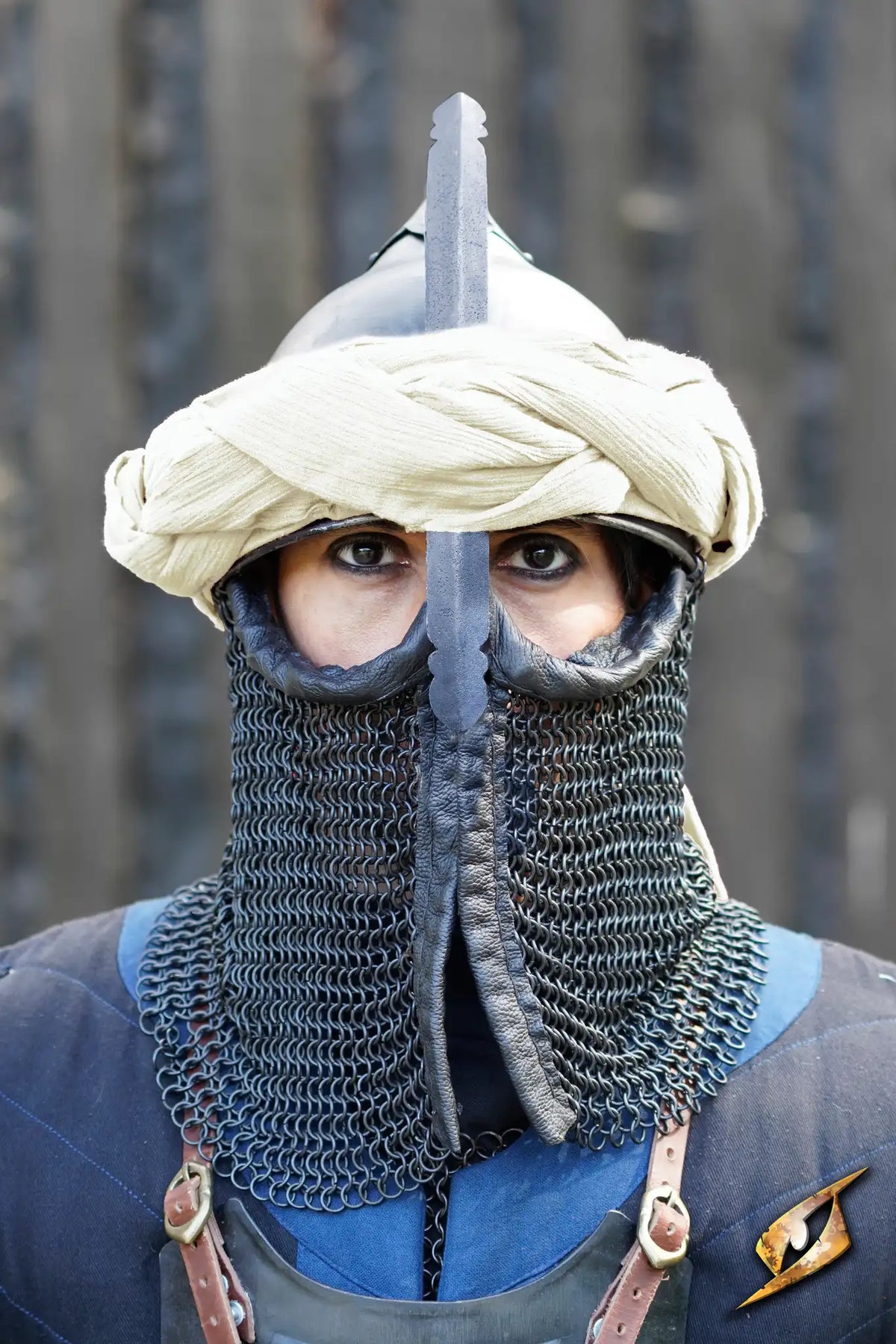
- Persian Helmet — For characters from the medieval Islamic world, or for fantasy concepts that lean east. Steel construction to the same standard as the rest of the range.
Fantasy helmets Not strictly historical, but built on the same mild steel and the same padded liner as everything else. For characters that don't need to pass a period check.
- Renegade Helmet, Raven Helmet, Secret Helmet, Guardsman Helmet, RFB Helmet — Each one its own silhouette. Browse the range and pick what matches your character.
Pair any of them with our chainmail coif for the neck and shoulder coverage a helmet alone doesn't give you.
How to choose
Decide how much face you want to lose. This is the real question. A closed helmet like the Sugar Loaf or Visored Barbuta with the visor down looks incredible in photos and disappears your character entirely on the field, which is great for menace and bad for being recognised by your own party. An open helmet keeps your face visible, your voice clear, and your peripheral vision intact. Most experienced players own one of each, or one with a moveable visor.
Match the helmet to the century. Roughly: nasal helmets and spangenhelms for Viking-age and early Norman characters. Great helms and sugar loaves for the high medieval, 12th to 14th century. Bascinets and sallets for the late medieval, 14th to 15th century (we don't make a bascinet, the sallet covers most of this ground). Burgonets and morions for the 16th century. If your group cares about period accuracy, this matters. If they don't, pick what looks right.
Vision and breathing matter more than you think. Eye slits look small in the catalogue. They feel smaller when you're actually wearing the thing and tracking an opponent. The Sugar Loaf is the most restrictive in our range. The Barbuta with its open T-slot is the most generous. If you've never worn a fully closed helmet before, try one on at an event before you commit, or start with something open.
What goes under it. Our helmets ship without an arming cap or coif. You'll want a padded coif or arming cap underneath for comfort and impact, and a chainmail coif over that (or instead, depending on character) for neck protection. The padded leather liner inside the helmet handles fit, not impact. Separate jobs.
Sizing. Measure the circumference of your head just above the eyebrows, where the helmet will sit. Our padded leather liner adjusts within a range but the shell itself is fixed. Allow for whatever you're putting between helmet and scalp, an arming cap adds noticeable bulk. Between sizes, go up. A helmet that's slightly too big can be padded out. A helmet that's too tight stays too tight.
Why ours
Mild steel, hand-shaped, lighter than the originals. That last part isn't a marketing line. Historical helmets ran 2 to 4 kilos depending on style, which is fine for a battlefield engagement that lasted minutes and miserable for a larp event that lasts days. We build to roughly the same shapes at weights you can actually wear from dawn until the feast. Padded leather liner in every helmet, leather chin strap, no decorative shortcuts on the parts that take the load. The catalogue covers the full medieval timeline because the hobby covers the full medieval timeline. Picking a single century to focus on would have left half our customers shopping somewhere else.
Things people ask us
What's the difference between a great helm, a sugar loaf, a bascinet, and an armet? Great helm is the family. Sugar loaf is a specific great helm variant with a conical top, late 13th to early 14th century. Bascinet is a later evolution, more form-fitting, often with a pointed visor (we don't currently make one). Armet is later still, fully enclosed with a hinged visor and cheek pieces (also not in our current range). For most knight characters, a sugar loaf or sallet covers it.
What helmet did medieval knights actually wear? Depends on the century. 11th and 12th century knights wore nasal helmets. 13th century brought the great helm and sugar loaf. 14th century the bascinet took over. 15th century the sallet dominated in northern Europe and the barbuta in Italy. By the 16th century the armet and close helm had largely replaced everything older. A knight's helmet was whatever was current.
Can I actually see out of a closed helmet? Yes, with a meaningful reduction in peripheral vision and depth perception. You learn to turn your head more. First event is an adjustment. By the second, you stop noticing.
Are steel helmets safe for larp? Yes. Larp combat uses foam or latex weapons, not steel, and a steel helmet is built to take those without issue. Check your larp's rules anyway, a small minority of systems restrict metal headwear.
How heavy are they? Most of our helmets sit between 1.2 and 2.5 kilos depending on style. Lighter than historical, heavier than a PU equivalent. You'll feel it on your neck for the first hour and then your body adapts.
Do I need an arming cap or coif? Yes, especially under a closed helmet. Padded leather liner inside the helmet handles fit. An arming cap or padded coif handles comfort and impact. A chainmail coif handles neck protection. Different jobs, separate pieces.
Will it fit over glasses? For open-faced helmets, usually yes. For fully closed helmets like the Sugar Loaf, glasses are a struggle and contacts are easier. Worth knowing before you order.
How do I look after it? Wipe down after each event, store dry, light coat of oil before it sits unused for a while. Mild steel rusts if you ignore it. Five minutes a few times a year keeps a helmet looking sharp for a decade.